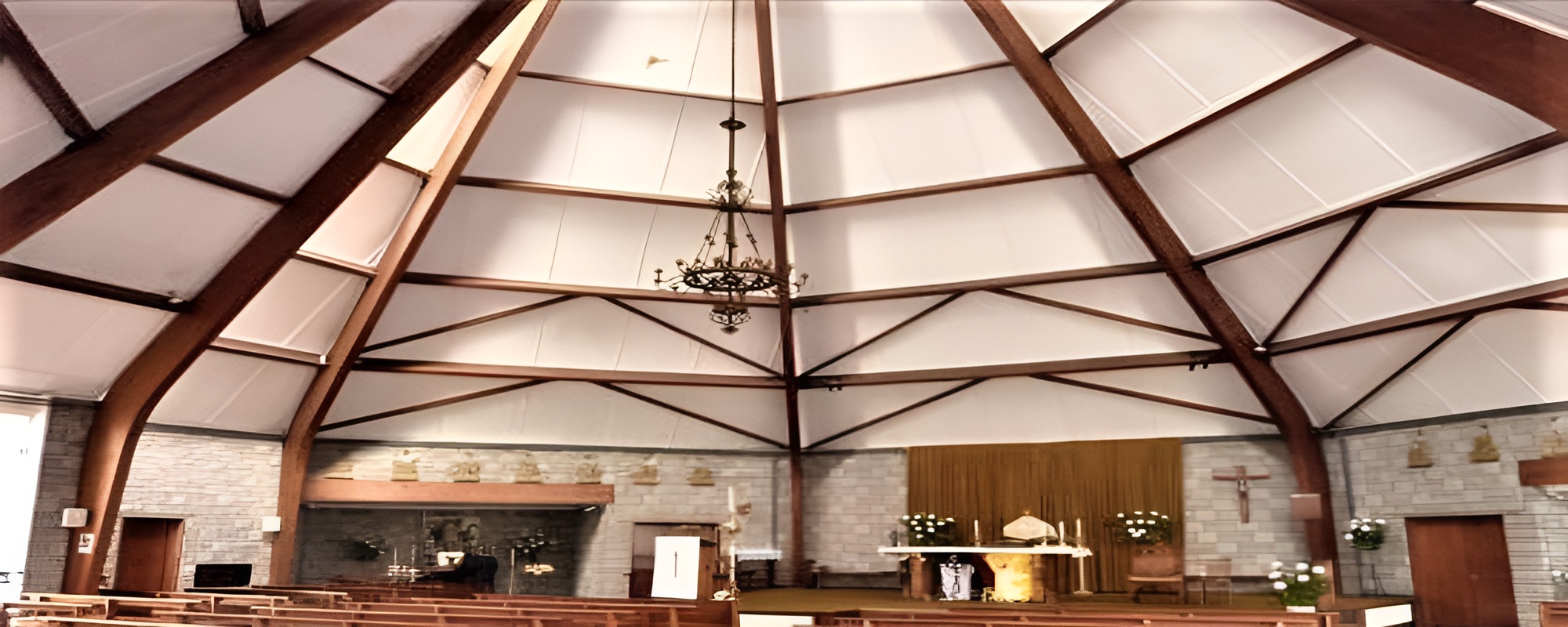
Serving the community of Baguley, Newall Nreen, Northenden & Northern Moor
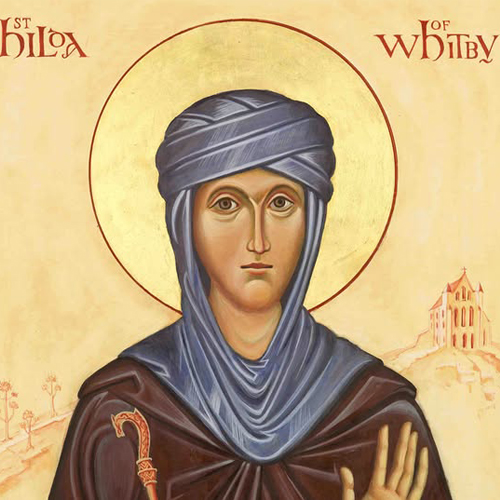
According to history, St. Hilda was born in 614 into the Deiran royal family. She was the second daughter of Hereric, who died in exile at the court of the British King of Elmet, in what is now West Yorkshire, while Hilda was still an infant. Hilda was eventually brought up at King Edwin’s court. In the year 627, precisely, on the Easter, 12th of April, King Edwin was baptized along with his court, which included the 13 year old Hilda in a somewhat, small wooden church hastily constructed for the occasion, near the site of the present York Minster.
The baptismal ceremony was performed by the Monk, Bishop Paulinus, who had come from Rome in company of Saint Augustine of Hippo. Saint Hilda was among the nobles and courtiers who were baptized with Edwin. This will suggest that as a young girl, St. Hilda must have been aware of the tradition of the church in Rome and of the existence of a monastic life. By par adventure, the exact place where St. Hilda began her life as a nun is not known, except that it was on the North Bank of river Wear. Here with a few companions, she learned the traditions of Celtic monasticism which Aidan had brought from Lona. A year after, Aidan appointed Hilda second abbess of Hartlepool. By 657, Hilda became the founding abbess of a new monastery at Whitby where she remained until her death on the 17th November 680, at the advanced age of sixty – six (66) years. Despite the agony she suffered from fever for the last six years of her life, she was still committed to her pastoral assignment. It is imperative to mention that in her last year she managed to set up another monastery, fourteen miles from Whitby at Hackness.
Local folklore says that St Hilda got rid of all the evil snakes and serpents in Whitby by throwing them off the top of the Abbey Cliff and that they turned to stone in the heat of her anger. This was a medieval explanation of the spiral fossil Ammonites found in the rocks below the cliffs.
To the glory of God, on her death bed, as was reported, she urged her community “to preserve the gospel peace among themselves and towards all others.”. This message may have later on found Expression in the Church slogan, “St. Hilda ………….. Peace and Love”, “Peace and Love………….. St. Hilda.” In the Roman Catholic Church, the feast day of St. Hilda is 17th November. On the level of patronage, St. Hilda is considered as one of the patron saints of learning and culture, including poetry. By way of Iconography – St. Hilda is generally depicted with a staff and carrying an abbey church. Often, there are ammonites at her feet.
66 Kenworthy Ln, Northenden,
Wythenshawe, Manchester M22 4EF,
United Kingdom
Saturday - Vigil Mass @ 6:00 PM
Sacrament of Reconciliation - 5.30 pm